

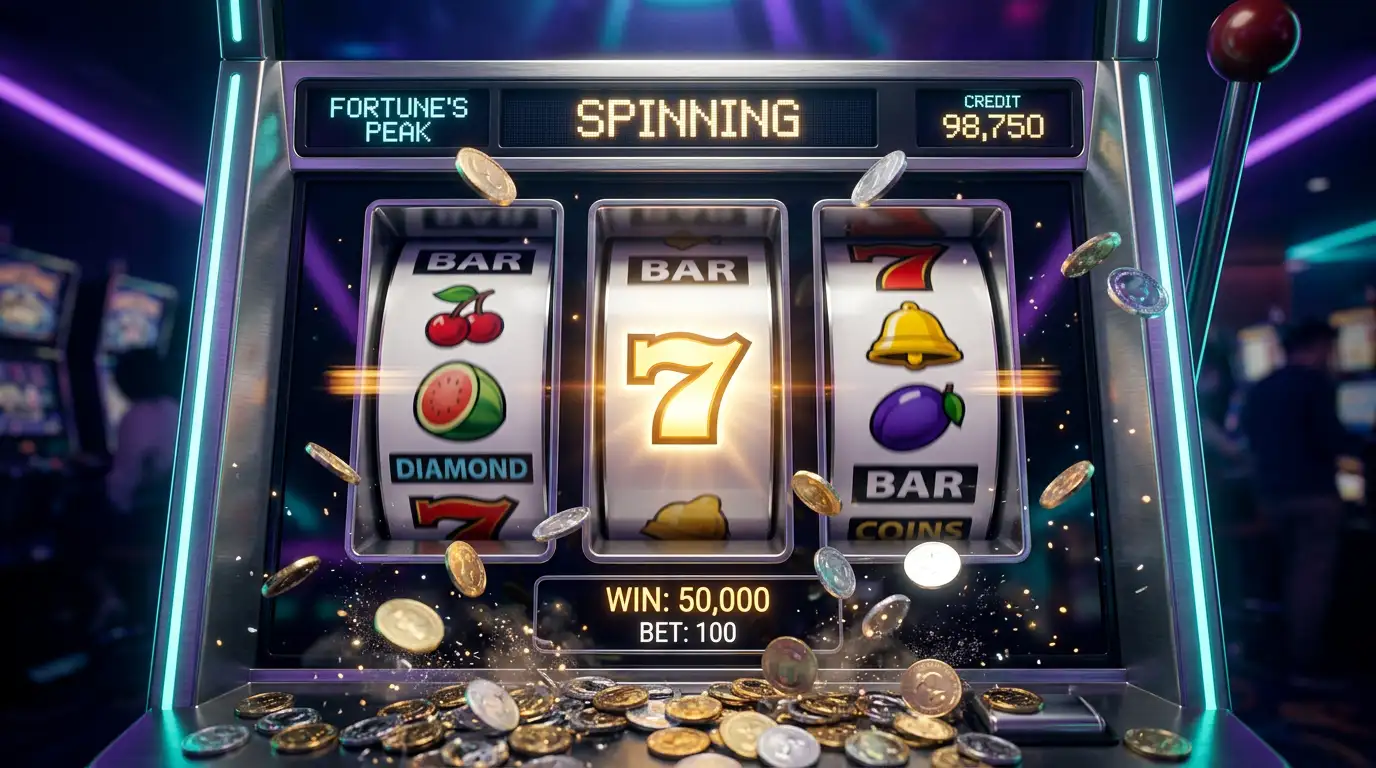
The regulated online gambling market has matured considerably across English-speaking countries. Licensing authorities enforce strict standards around game fairness, player protection, and responsible gambling provision. These regulatory frameworks give players confidence that the games they access are independently tested and that the platforms hosting them meet defined operational standards. That regulatory backdrop is essential context for anyone considering real money slot play, because it separates legitimate platforms from unregulated operations where neither fairness nor fund security can be guaranteed.
How Online Slots Work
The mechanics of an online slot are deceptively simple on the surface. A player selects a stake, presses a spin button, and the reels rotate before coming to rest on a random arrangement of symbols. If matching symbols land across one of the game’s paylines or winning ways, the player receives a payout determined by the symbols’ value and the size of the bet. That entire sequence – from button press to result – takes a few seconds, though the underlying technology driving it is considerably more sophisticated than the animated reels suggest.
Every outcome in a modern online slot is determined by a Random Number Generator, commonly referred to as an RNG. This is a software algorithm that produces sequences of numbers continuously, generating thousands of combinations per second even when nobody is actively playing. The moment a player initiates a spin, the RNG selects the most recent number in its sequence, and that number maps to a specific arrangement of symbols on the reels. Because each number is generated independently of every other, each spin is entirely separate from those before and after it. There is no memory, no pattern, and no cycle that can be exploited or predicted.
Most slot machines use what are technically called pseudo-random number generators, or PRNGs. These rely on complex mathematical algorithms and seed values to produce results that are statistically indistinguishable from true randomness. While the term “pseudo” might sound concerning, these systems are rigorously tested by independent laboratories and certified by regulatory bodies before any game reaches the public. The visual animation of spinning reels is purely presentational – the result is determined the instant the spin request is processed, well before the reels finish their choreographed stop sequence.
Key Concepts Every Player Should Understand
Before playing any online slot for real money, it helps to understand the terms that define how these games behave over time. The most important of these is Return to Player, or RTP. This figure, expressed as a percentage, represents the theoretical proportion of all wagered money that a slot will pay back to players across a very large number of spins. A slot with a 96% RTP, for example, is expected to return 96 units for every 100 wagered over the long term. The remaining 4% represents the house edge – the casino’s built-in mathematical advantage.
The industry average for online slot RTP sits around 96%, though individual games range widely. Some titles offer RTPs above 98%, while others sit closer to 92% or even lower. Higher RTP generally means better long-term value for the player, though it is critical to remember that this figure is calculated across millions of spins. In any individual session, actual results can deviate enormously from the theoretical average. A player might win several times their stake in one sitting and lose their entire bankroll in another, regardless of the game’s published RTP.
Volatility, sometimes called variance, describes the pattern of those deviations. Low-volatility slots tend to produce frequent but smaller wins, creating a steadier experience with less dramatic swings in balance. High-volatility slots pay out less often but deliver larger individual wins when they do hit. Neither profile is inherently better – the choice depends on the player’s temperament, bankroll size, and appetite for risk. A player with a limited budget and a preference for extended play sessions will generally have a more sustainable experience with lower-volatility games, while those comfortable with longer stretches between wins may prefer the higher-variance alternative.
Paylines and winning ways define how symbol combinations are evaluated. Traditional slots use fixed paylines – specific lines running across the reels where matching symbols must land to trigger a payout. Modern video slots have expanded this concept significantly, with some games offering hundreds or even thousands of ways to win through systems like Megaways, where the number of symbols on each reel changes with every spin.
Reels, Symbols, and Bonus Features
The visual components of an online slot are more than decoration – they determine how the game plays and pays. Reels are the vertical columns that display symbols, and most contemporary slots use five of them, though three-reel classics and expanded formats with six, seven, or more reels all exist. The number of reels directly affects the complexity of the game and the range of possible symbol combinations.
Standard symbols carry specific monetary values, and landing the right number of matching symbols across an active payline or winning way produces a payout scaled to the bet size. Beyond these regular symbols, most modern slots include special symbol types that introduce additional mechanics. Wild symbols act as substitutes, standing in for other symbols to complete winning combinations. Scatter symbols typically trigger bonus features regardless of their position on the reels, often activating free spin rounds or bonus games when enough of them appear.
Bonus features are where online slots diverge most dramatically from their mechanical ancestors. Free spin rounds award a set number of spins at no additional cost, often with enhanced features like multipliers, expanding wilds, or additional scatter opportunities. Pick-and-click bonus games present the player with a selection of hidden prizes. Cascading reels remove winning symbols after a payout and drop new ones into their place, potentially creating chain reactions of consecutive wins from a single spin. These features add layers of engagement and can significantly affect the overall payout potential of a game.
Types of Online Slots
The variety available in the online slot market is genuinely vast, but most games fall into a handful of broad categories that are useful for understanding what to expect from each format.
Classic slots draw directly from the original mechanical slot machine design. They typically use three reels and a limited number of paylines, with traditional symbols like fruits, bars, bells, and sevens. The gameplay is deliberately simple and fast-paced, appealing to players who value a clean, uncluttered experience without elaborate bonus structures. For many players, classic slots carry a nostalgic appeal that more complex games cannot replicate.
Video slots represent the largest and most diverse category. Built around five or more reels with multiple paylines, these games feature advanced graphics, animation, and sound design. Thematic depth ranges from ancient civilizations and fantasy worlds to licensed properties based on films, television shows, and music. Video slots almost always include bonus features – free spins, multipliers, expanding symbols, and interactive mini-games that break up the base game and introduce additional winning opportunities.
Progressive jackpot slots link a portion of every bet placed across a network of games into a shared prize pool that grows continuously until a player triggers the winning combination. These jackpots can reach into the millions, making progressive slots the most high-stakes format available. The trade-off is typically a lower base game RTP, since a fraction of each wager feeds the jackpot rather than contributing to regular payouts. The appeal is obvious – the chance at a life-altering sum from a single spin – but players should understand that the odds of actually hitting a progressive jackpot are extremely long.
3D slots are a subcategory of video slots that push visual fidelity further, incorporating three-dimensional character models, cinematic cutscenes, and narrative arcs that develop as the player progresses through the game. These titles represent the cutting edge of slot design, blending gambling mechanics with elements borrowed from video game storytelling. The immersive quality is high, though the underlying payout mechanics function identically to any other RNG-driven slot.
Choosing the Right Slot
With thousands of titles available across major platforms, selecting a slot that matches your preferences and playing style is a meaningful decision. The first filter worth applying is RTP – all else being equal, a higher RTP translates to better long-term value. Most reputable slots display their RTP in the game’s information or help section, and many review resources compile these figures for comparison. Aiming for games with an RTP of 96% or above is a reasonable starting point, though players should weigh this against other factors rather than treating it as the sole criterion.
Volatility should match both your bankroll and your temperament. If you are working with a smaller budget and want to play for an extended period, low-volatility slots offer a more forgiving experience. If you prefer the anticipation of infrequent but larger payouts and can absorb longer losing stretches without frustration, high-volatility games deliver that kind of tension.
Theme and production quality matter more than some players initially assume. Since slot sessions can last a significant amount of time, playing a game whose visuals, sound design, and bonus mechanics you genuinely enjoy makes the experience more pleasant regardless of the financial outcome. The software provider behind a slot also serves as a useful quality indicator. Established developers have reputations built on producing games with reliable mechanics, polished presentation, and verified fairness.
Demo mode is one of the most underused resources available to online slot players. Most platforms offer a free play version of their games that uses virtual credits instead of real money. This allows players to explore a slot’s mechanics, bonus triggers, and payout behavior without financial risk. Spending time in demo mode before committing real funds to an unfamiliar game is consistently good practice.
Strategies and Common Myths
Online slots are fundamentally games of chance, and no strategy can overcome the mathematical house edge built into every title. That said, several practical approaches can help players manage their experience more effectively. Selecting games with higher RTP reduces the expected rate of loss over time. Setting a session budget before playing and committing to it prevents the common trap of chasing losses. Starting with smaller bets allows more spins per session and more exposure to bonus features that may not trigger on every spin.
Bankroll management is arguably the most impactful discipline a slot player can adopt. Deciding in advance how much you are prepared to lose in a given session, dividing larger bankrolls across multiple sessions rather than risking everything at once, and walking away when the predetermined limit is reached are all habits that separate sustainable play from problematic gambling behavior. Many online platforms offer built-in tools to support this discipline, including deposit limits, session timers, and reality check notifications.
Several persistent myths deserve direct correction. The idea that a slot becomes “due” for a payout after a long losing streak – the so-called “hot and cold” theory – is flatly false. Because each spin is determined independently by the RNG, previous results have absolutely no influence on future outcomes. A slot that has not paid out in a hundred spins is no more likely to pay on the next spin than one that just delivered a large win. Similarly, there is no time of day or day of week when slots are programmed to pay more favorably. The RNG operates continuously and uniformly regardless of external factors.
Bonuses and Promotions
Online casinos use bonuses to attract new players and retain existing ones, and slots are typically the primary beneficiary of these promotional offers. The most common bonus types are free spins, no-deposit bonuses, deposit match offers, and free play credits, each with distinct mechanics and conditions.
Free spins allow a player to spin the reels of a specific slot – or sometimes a selection of eligible slots – without placing a wager from their own balance. These are frequently offered as part of a welcome package for new registrations, through ongoing loyalty programs, or as limited-time promotional campaigns. The number of spins, the games they apply to, and the value per spin all vary between offers.
No-deposit bonuses provide a small amount of bonus funds upon registration without requiring the player to make any financial commitment. These offers are appealing precisely because they carry no upfront cost, but they invariably come with wagering requirements – a multiplier that determines how many times the bonus amount must be wagered before any winnings can be withdrawn. A bonus of 10 units with a 40x wagering requirement, for example, requires 400 units in total wagers before the player can cash out. Understanding these terms before accepting any bonus prevents disappointment later.
Deposit match bonuses multiply a player’s initial deposit by a specified percentage, effectively doubling or even tripling the starting bankroll. These tend to offer the largest nominal value but carry the most complex terms, including wagering requirements, maximum bet limits while playing with bonus funds, game contribution percentages, and time limits within which the requirements must be met. Slot games typically contribute 100% toward wagering requirements, while table games may contribute at reduced rates or not at all.
Free play offers give players a set amount of bonus credit or a fixed time window to play freely, with winnings above a certain threshold convertible to withdrawable funds. These are less common than other bonus types but provide an opportunity to explore a platform’s game library without financial exposure.
Mobile Slots
The migration of online slots to mobile devices has been one of the defining trends in the industry over the past decade. Modern slot games are built using HTML5 technology, which renders natively in mobile browsers without requiring a dedicated app or plugin. This means that virtually every slot available on a desktop platform is also accessible on smartphones and tablets, with interfaces automatically adjusted for smaller screens and touch-based interaction.
The practical experience of playing slots on mobile is broadly equivalent to desktop play, though some visual details may be simplified to accommodate smaller displays and varying hardware capabilities. Touch controls replace mouse clicks, and portrait-mode layouts are now standard for mobile-first design. Many players find the convenience of mobile access to be one of online slots’ most compelling advantages – the ability to play during a commute, a break, or any other spare moment fundamentally changes the accessibility equation compared to both desktop play and physical casino visits.
Many operators also offer dedicated mobile apps for iOS and Android, which can provide smoother performance, push notifications for promotional offers, and quicker access to the game library. Whether playing through a browser or an app, the underlying game mechanics, RTP values, and bonus structures remain identical.
Playing for Real Money
Transitioning from free play to real money slots involves registering with a licensed platform, completing identity verification, and depositing funds. The registration process requires standard personal information, and identity checks are mandated by gambling regulations to prevent underage play and financial crime.
Payment methods available for deposits and withdrawals vary by region but commonly include debit and credit cards, e-wallets, prepaid voucher systems, and bank transfers. Processing times differ across methods – e-wallets typically handle transactions within hours, while bank transfers may take several business days. Players should confirm that their preferred method supports both deposits and withdrawals, as some options are restricted to one direction.
When withdrawing winnings, most platforms require a verification step the first time and may impose a processing period during which the withdrawal request is reviewed. Minimum and maximum withdrawal limits apply at most casinos, and the terms around these limits are worth checking before play begins rather than after a win.
Responsible Gambling
The accessibility and speed of online slots create an environment where responsible play practices are particularly important. The same qualities that make slots convenient and entertaining – instant access, rapid play cycles, immersive design – can also contribute to excessive play if boundaries are not established in advance.
Regulated platforms provide a suite of tools designed to help players maintain control. Deposit limits cap the amount that can be added to an account within a defined period. Loss limits restrict the total amount that can be lost. Session time reminders prompt players at set intervals with notifications about how long they have been playing. Self-exclusion programs allow players to block their own access to a platform for a specified period, ranging from days to months or permanently.
Setting a budget before each session, treating slot play as entertainment rather than a source of income, and never wagering money that is needed for essential expenses are foundational principles of responsible play. If gambling stops being enjoyable or begins to cause stress, seeking support through the resources available on most regulated platforms is a constructive step.
Glossary of Common Terms
Volatility – a measure of how a slot distributes its payouts. Low volatility produces frequent smaller wins; high volatility produces larger but less frequent wins.
RNG (Random Number Generator) – the algorithm that determines the outcome of every spin, ensuring results are independent and unpredictable.
Payline – a line across the reels on which matching symbols must land to produce a win. Games can have anywhere from one to thousands of paylines or winning ways.
Wild Symbol – a special symbol that substitutes for other symbols to help complete winning combinations.
Scatter Symbol – a symbol that triggers bonus features, often regardless of its position on the reels.
Free Spins – bonus rounds that award additional spins at no cost to the player, often with enhanced features like multipliers.
Progressive Jackpot – a prize pool that grows with every bet placed across a linked network of games, accumulating until one player hits the triggering combination.
Wagering Requirement – the number of times a bonus amount must be wagered before winnings derived from it become withdrawable.
Multiplier – a feature that multiplies winnings by a specified factor during certain conditions or bonus rounds.
